Matian Book Club · May 2026
Leadership
Henry Kissinger
Orbis374 · Matian Book Club
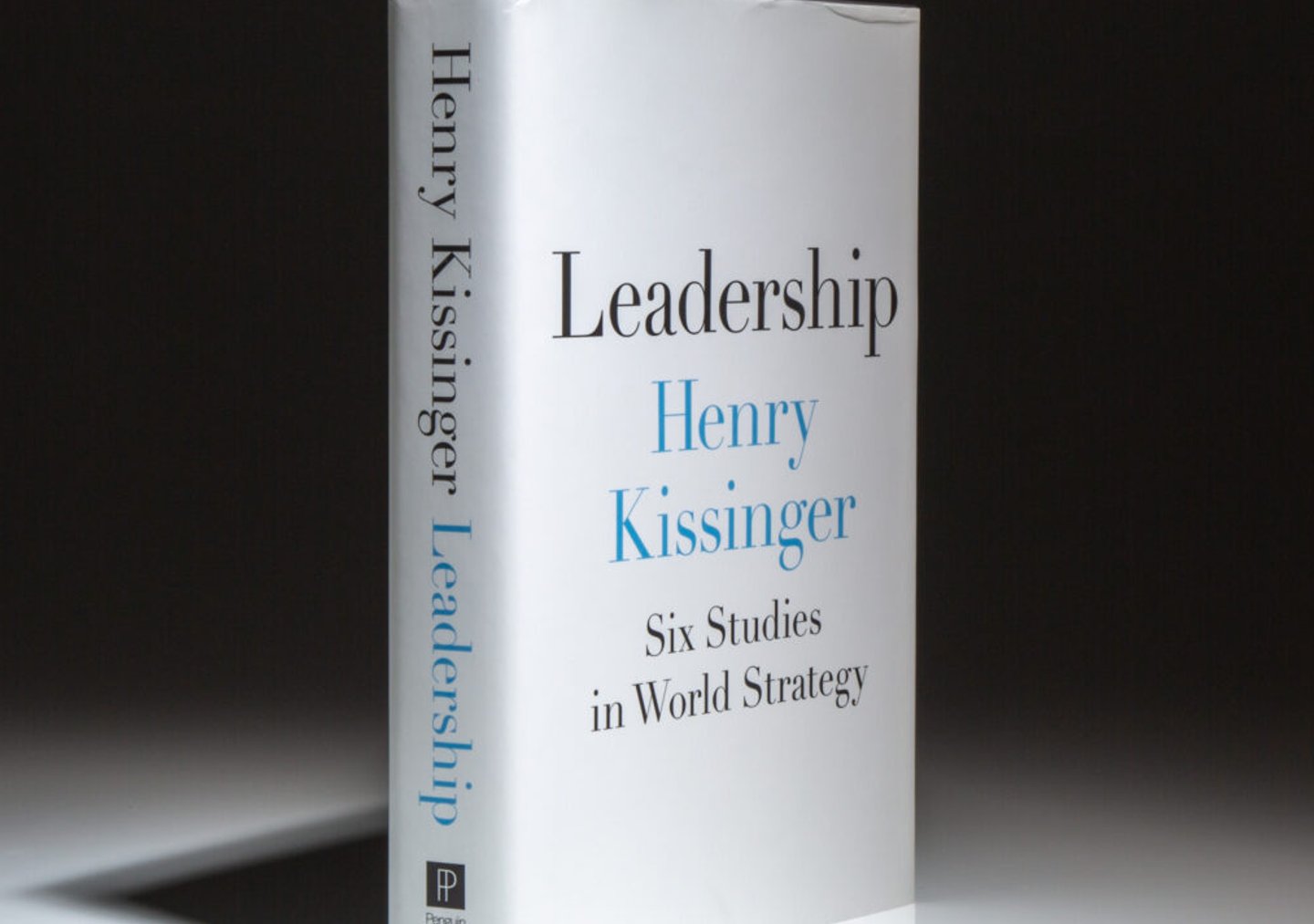
Henry Kissinger's Leadership: Six Studies in World Strategy was published by Penguin Books on April 28, 2022. It stands as one of his most personal and ambitious works — a book written not just by a scholar of power, but by someone who sat at the table with the very people he writes about.
Henry Kissinger's Leadership: Six Studies in World Strategy was published by Penguin Books on April 28, 2022. It stands as one of his most personal and ambitious works — a book written not just by a scholar of power, but by someone who sat at the table with the very people he writes about.
The book examines the lives and strategies of six major 20th-century figures: Konrad Adenauer, Charles de Gaulle, Richard Nixon, Anwar Sadat, Lee Kuan Yew, and Margaret Thatcher. Each chapter is structured around a distinct leadership philosophy — from de Gaulle's unyielding assertion of national will to Thatcher's iron-willed conviction that reshaped a country many had written off. Barnes & Noble
At its core, the book is a meditation on what leadership actually demands. Kissinger argues that leaders must think and act at the intersection of two axes: the first, between the past and the future; the second, between the values and aspirations of those they lead. They must balance what they know — drawn from the past — with what they intuit about the future, which is inherently uncertain.
The six leaders Kissinger profiles inherited a world whose certainties had been dissolved by war, and each went on to redefine national purpose. What ties them together is not a shared style but a shared quality of character. Kissinger identifies courage and strength of character as the most important qualities of political leadership.
The book's closing chapter is perhaps its most provocative. Kissinger sees an "evolutionary decay" in the conditions that produced these six leaders — with civic patriotism increasingly outflanked by identity-based factionalism, and modern media's tendency toward emotionalization eroding the kind of deep, analytical thinking that great statesmanship requires.
Leadership was praised widely as a New York Times bestseller, with the Wall Street Journal calling it "an extraordinary book" that seamlessly blends the dance and the dancer. For anyone interested in how power is wielded — and what it takes to wield it well — it's a compelling read.