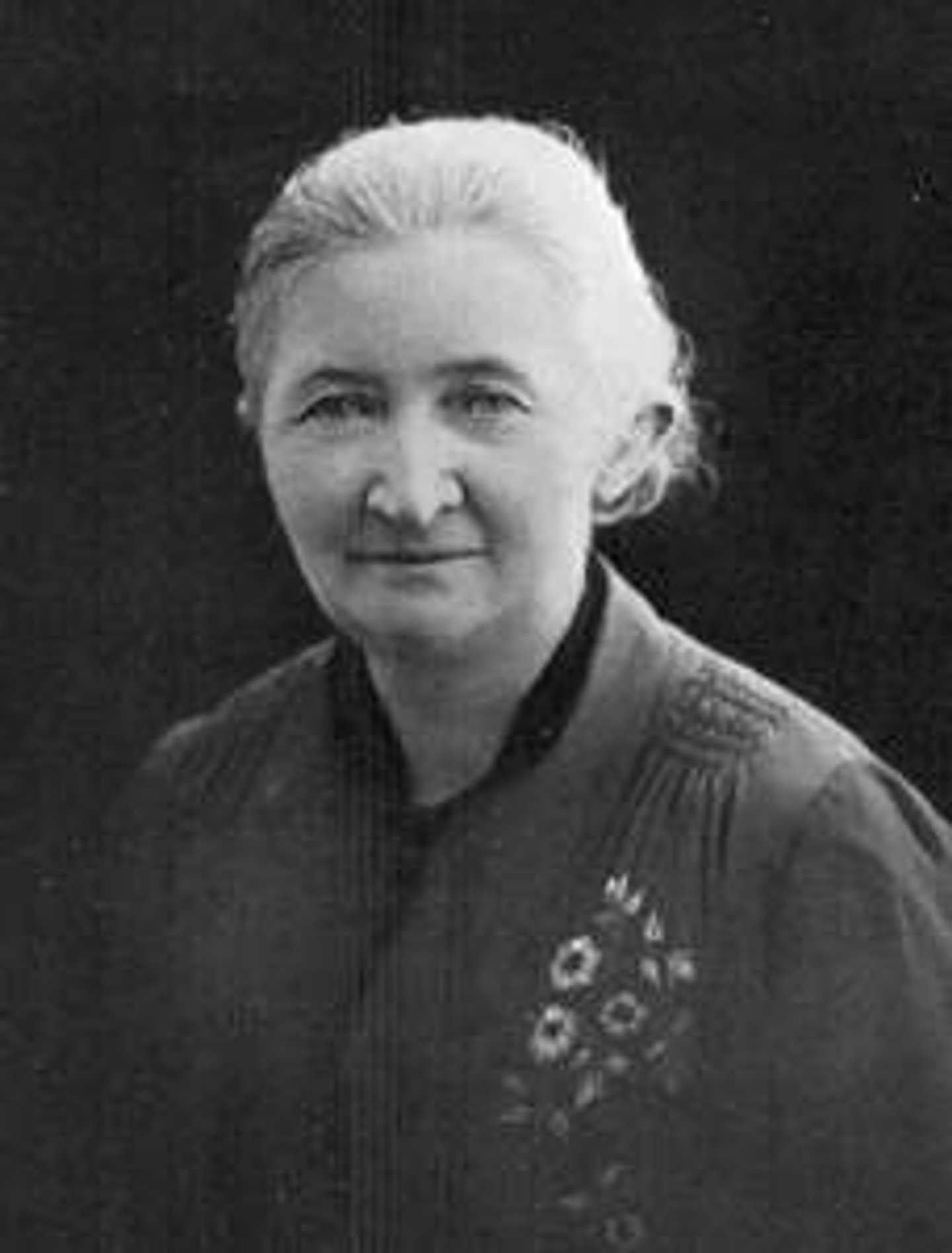
Writer and fundraiser
Karen Jeppe
Karen Jeppe: The Danish Teacher Armenians Called Mother
In the autumn of 1915 a Danish woman stood at an upstairs window in Urfa, feverish with typhus and malaria, and thought about jumping. Under the floorboards below her, twelve Armenian men were hiding from the gendarmes. In the evenings she set a lit candle in the window, the signal that the street was clear. In the daytime she taught the men German, to give their minds something to hold besides the sound of boots.
Karen Jeppe was thirty-nine. She had come to this city twelve years earlier to teach orphans, and she would end her life in Syria, buried in an Armenian cemetery with an Armenian funeral. Armenians called her their mother. In her home village in Jutland, a stone still says the same thing in Danish: Armeniernes Moder.
Her story runs along the old road between Anatolia and the Syrian desert, the one that deportees walked in the Armenian Genocide of 1915 and that Armenians in Aleppo spent the 1920s trying to walk back. A teacher from a Danish farming parish ended up standing in the middle of it, and the paper she left behind is some of the best evidence we have of who came out the other side.
A calling in Jutland
Karen Jeppe was born on 1 July 1876 in Gylling, the daughter of the village teacher. As a student in Copenhagen she started mathematics, broke down, and spent nearly two years ill before going back to teaching. It was not an obvious start for a rescuer.
The turn came in 1902, when her headmaster read his staff an account of the 1895 massacres of Ottoman Armenians, written by the Danish orientalist Aage Meyer Benedictsen. Sources disagree on whether it was an article or a lecture. They agree on what it did to her. In the biography written by her friend Ingeborg Maria Sick, the decision arrives in the spring of 1903 as a single command, Du skal, you must. That November she left for Urfa, the ancient Edessa, traveling with the Swiss deacon Jakob Künzler. A new Danish committee, De Danske Armeniervenner, paid her fare. Johannes Lepsius's German Orient Mission paid her salary.
The courtyard she walked into says something about the Ottoman east before 1915. An American, Corinna Shattuck, was there to meet her, and showed her the mound outside the city gate where the dead of 1895 had been buried. A Swiss, a German mission and a Danish teacher were all working in the same orphanage, a former caravanserai that held as many as 350 children, with a kitchen, bakery, laundry and workshops. Within about eighteen months Jeppe was running it.
Jeppe never liked being called a missionary. Matthias Bjørnlund and Elyse Semerdjian, who wrote a richly illustrated account of her, note that she explicitly distanced herself from the word. Her loyalty was to the Armenians as a people, and to the church that she thought had kept them one. The distinction matters later in the story, because it explains both how far she went and how narrowly she defined who she was going for.
Aleppo, and the registers
What she did in 1915 is the part told most often. She fed the convoys passing through Urfa. When the city's own Armenians were deported that August, she hid about fifty of them, first under the floorboards, then in a ditch under a flowerbed, then in a tunnel. Among the hidden was a priest, Der Karekin Voskerichian, who with his wife took strychnine rather than risk giving the others away. The last fugitives left her house in December 1917. In early 1918 she went home to Denmark, emaciated and close to a nervous collapse, and spent three years lecturing and lobbying.
In February 1921 the League of Nations created a commission for the protection of women and children in the Near East. Its job was to find the Armenian women and children who had survived the Armenian Genocide by being absorbed into Muslim households, as wives, servants, adopted children. Jeppe arrived in Aleppo in 1921 and was working for the League within months, though the exact date of her appointment, and her exact title, vary from source to source. The first entry in the Rescue Home register is dated 1 March 1922.
The method was blunt. Agents searched the countryside from stations at Rakka, Deir ez-Zor and elsewhere. Rescue came through negotiation, payment, and sometimes through quietly telling someone to run. Ransoms, according to the Armenian Genocide Museum-Institute, ran from half a Turkish gold piece to two, occasionally ten. Jeppe crossed the Euphrates by raft and drove her Ford cars into the steppe. The League withdrew its funding in 1927, and she kept the work going under her own name.
Every arrival was washed, photographed against a prop fence and entered in a register: number, name, father's name, native place, age, a few lines of history. One note, written about a girl named Siranoush, observed that her eyes had been tearless for a long time. Another entry recalls a twelve-year-old boy, Onnig, who rolled his own cigarettes and refused to give up his Arab headdress, until his mother recognized him in the street. The registers survive in the League of Nations archive in Geneva, and a 1926 Pathé film made for the League, with Danish intertitles, dramatizes its work.
The sources do not agree on how many people passed through. Jeppe's own statistics at the end of 1927 counted 1,484. The surviving registers, which run to 1930, hold 1,664 entries. The Armenian Genocide Museum-Institute in Yerevan published 1,464 intake surveys in 2022. "Some two thousand" is a round figure for everyone who came through, and it should be read as a round figure.
Farms at the edge of the desert
Rescuing people was only half the problem. In 1922 a new wave of refugees reached Aleppo from Cilicia after the French withdrawal, and the city could not feed what it already had. The French authorities in Syria had offered land for an agricultural colony and found no takers. Jeppe distrusted them, and in private letters said Europeans dealt with Armenian matters mainly to ruin them.
What she did instead was local. She befriended Hadjim Pasha, a Bedouin sheikh whose land lay east of the Euphrates, and persuaded him to let Armenians settle on part of it. The first colony, Tel Samen on the Balikh river, was founded in 1923 or 1924, depending on the source. Hadjim Pasha is reported to have told one of her agents to put a captive woman in a motor-car and send her to the Rescue Home, because the poor Armenians had suffered much from his people, and it was enough. More colonies followed, about six in all, with names like Tel Armen, Tineh and Charb Bedros: beehive mud-brick houses, young trees, a school.
On 25 November 1928 seven couples were married at once in one of them, with Archbishop Ardavazt Surmeyan officiating. Jeppe approved such weddings, standing in for the brides' families. Photographs of such weddings are in the Yerevan museum's collection. They are tender pictures, and they are also the clearest evidence of what the project was for. The Rescue Home did not only take people out of captivity. It was meant to turn them back into Armenian villages.
Jeppe herself lived most simply at Tel Armen, in a small white house, the one place where, by Danish accounts, she ever rested.
What the record does not forgive
The historians who have read her most closely, Keith David Watenpaugh, Rebecca Jinks, Elyse Semerdjian and Vahé Tachjian among them, treat her as sincere and effective. They also agree that her work was nationalist by design and carried the racial thinking of its decade. Both things sit in the same archive.
In a League report that Watenpaugh quotes, Jeppe wrote that the Armenian young people in her care were more developed than the people they were forced to live among, and that weak or degenerate individuals gave in more easily and became Muslims. Watenpaugh reads this as part of a League logic in which a proper racial order was thought to be at stake, and notes that the League showed no matching concern for Kurdish and other Muslim women and children in similar conditions. For him, her humanitarianism was not universal but particular.
The tattoos are the sharpest example. Many survivors carried tattoos given in the households that had held them, designs that Armenian and European observers read as marks of Islamization and shame. Jinks shows relief workers sorting women by how recoverable they looked, and the women with visible tattoos were judged harder to recover than the rest. Semerdjian argues that the racialization of the tattoos fed an assumption that these women were morally damaged. Jeppe publicly argued with the Turkish writer Halide Edib over who was to blame for them.
Then there are the children. One letter survives in which Jeppe tells Archbishop Surmeyan that taking in children of Muslim fathers is against her rule, and refers to them in terms that are painful to read now. The letter is known through Vahé Tachjian's work. What historians do with it is the open question. Inger Marie Okkenhaug takes it as evidence of a general policy of refusal. Lerna Ekmekçioğlu points out that it is the only example Tachjian gives, and Houshamadyan notes that some women did arrive at the Home with their half-Muslim children. The attitude is documented in her own words. The policy is not.
None of this makes the rescue smaller. It makes it a human act done by a particular person inside a particular set of ideas, with payments, pressure and persuasion all part of the method, and with women who sometimes did not want to leave the household they had been taken into. The registers record the ones who came. They cannot record the ones who stayed.
Two stones
In the summer of 1935 she caught a serious malaria attack at Tel Armen. A Ford carried her to a French hospital in Aleppo, where she died on 7 July, six days after her fifty-ninth birthday. The funeral was held in the Armenian church. According to the Aleppo Armenian historian Hagop Cholakian, Archbishop Surmeyan draped a Danish flag over the altar. She was buried in the Armenian cemetery at Shaykh Maqsud, where the writer Hagop Oshagan would later be laid beside her.
On her sixtieth birthday, a year later, villagers in Gylling raised a stone by the church with the words Karen Jeppe, Armeniernes Moder. In 2014 an Armenian khachkar, cut by the sculptor Suren Leisikyon, was set up beside it, and the Armenian ambassador came to Jutland for the unveiling. Every year on 1 July and 24 April, a small crowd gathers there. In Yerevan, at Tsitsernakaberd, a stone bearing her name is said to hold earth from her grave in Aleppo.
Jeppe seems to have disliked the heroine's role. A line attributed to her by Sick, that rests on Sick alone, has her saying she had done little more than let things happen. It is a modest thing to say about a woman who hid fifty people and found her way, by raft and motor-car, to well over a thousand more. It is also true in an odd way. What she mostly did was stay when it was easier to go, and keep a record.
The record is what is left. In Geneva there are registers with photographs of women and children, each with a number, each looking at a camera held by someone who wanted them back. They were counted so that they could be named again.