The History of Coffee: From Legend to Your Cup
Words TEAM O374
Photo by TIM MOSSHOLDER
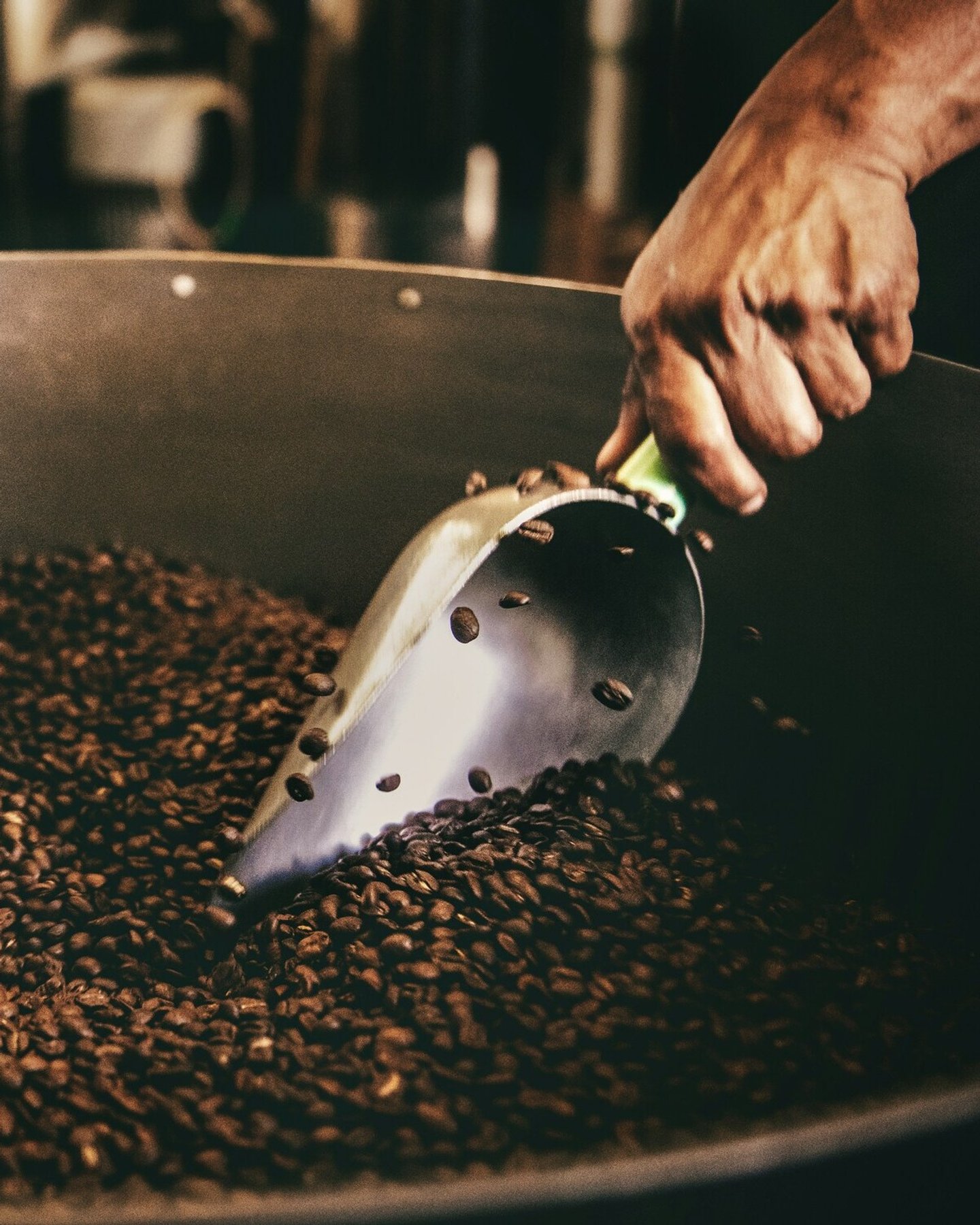
Coffee is a delicious and addictive mystery. Most of us wake up already thinking about that first sip, the one we hope will make the day a little better. But sometimes we wonder: how did we, as humans, even realise that these beans could become a drink? One that would go on to become one of the most famous drinks in the world.
There are many legends behind how it was invented and when it was first found, but no exact evidence of where it all really began.
And as we at Orbis374 are all kind of coffee addicted, we wanted to dig into the stories and legends behind the coffee bean. So, to continue reading, prepare your favourite coffee. This might be a long, long story.
Legendary drink started from Legend
Our curiosity about coffee brought us deep into the highlands of Ethiopia. But Kaldi was there before us. And he was curious too, just about something slightly different: what on earth had made his goats lose their minds.
Who was Kaldi, you may ask. He was a simple herder. Every day in his life looked exactly the same. He took his goats to the field in the morning, brought them home in the evening, and went to join the prayers with the monks.
But one morning was not planning to be like the others.
When he went to find his goats, he found them gathered around a plant, eating berries he had never paid attention to before. It never occurred to him that those berries would make him a legend. He took the goats back to their shelter and after a while, something shifted. The goats became extremely active, almost wild. Like something had occupied their bodies. They stayed restless until late into the night, barely sleeping.
Kaldi became suspicious. The berries were the cause, he was sure of it. The next day he shared his idea with his neighbors. They got scared and wanted nothing to do with it.
But Kaldi did not give up. He stayed awake through long night prayers every single night and it was a struggle. And then a thought came to him. If those berries kept his goats awake until midnight, maybe they could do the same for him.
He brought them to a local monk, hoping he might know what to do with them. The monk took one look and disapproved immediately. He threw the berries straight into the fire.
And that is when something unexpected happened.
A wonderful aroma began to fill the air. The monks gathered around, curious. They raked the roasted beans from the fire, crushed them, and mixed them with hot water. They drank it. They stayed awake through the entire evening prayers without struggling once.
No one found coffee. Coffee found us.
Who Invented Coffee? From Legend to the First Real Cup
The Kaldi story is a good one. But here is something worth knowing: the earliest written version of that legend appeared in 1671, in a Latin text by a scholar named Antoine Faustus Nairon. That is roughly 800 years after the events it describes. No earlier written record of Kaldi exists. Not one.
That does not mean Ethiopia has nothing to do with coffee. It has everything to do with it. The coffee plant, Coffea arabica, is native to the Ethiopian highlands. Its deepest genetic roots are there. Ethiopia is where coffee exists in the wild, where it grew before anyone decided to do anything with it.
But growing wild and becoming a drink are two very different things.
The earliest evidence of people actually cultivating coffee, roasting it, and drinking it the way we recognise today comes not from Ethiopia but from Yemen. Sometime in the late 15th century, in the mountain terraces above the Red Sea, people began growing coffee deliberately. They processed the beans. They brewed them. They drank the result.
Ethiopia gave the world the plant. Yemen gave the world the drink.
The two are not rivals in this story. They are two chapters of the same one.
Yemen Made It a Culture
The drink existed. But a drink alone is not a culture.
What happened next in Yemen changed everything. By the 15th century, coffee was no longer just something people consumed quietly. It became something people gathered around. Sufi monks were among the first to adopt it seriously, using it to stay alert through long nights of prayer and devotion. Coffee was not just useful. It was almost sacred.
And then the coffeehouse arrived.
Small, smoky rooms where people came not just to drink but to talk, to listen, to argue, to play chess, to hear music, to exchange news. They were called qahveh khaneh, and they spread fast. First through Yemen, then to Mecca, then to Cairo, Damascus, and beyond. People called them Schools of the Wise. Not because anyone was teaching, but because information moved through those rooms the way it moves through no other place.
Not everyone was comfortable with that.
In 1511, the authorities in Mecca shut the coffeehouses down. The concern was not really the coffee. It was the conversations happening over it. People gathered, people talked, people questioned things. That made rulers nervous. It would not be the last time.
Coffee was also debated by religious scholars. Was it lawful or forbidden? Was it heating or cooling? Did it help prayer or distract from it? The arguments went back and forth for decades. Coffee kept winning.
Meanwhile, Yemen became the world's first great coffee economy. Farmers grew it on mountain terraces. Merchants traded it through Red Sea ports. And one port above all others became synonymous with the bean: Mocha. Today when you order a mocha, you are saying the name of a Yemeni port city Mocha that has not dominated the coffee trade for centuries. History hides in plain sight.
The Coffeehouse Was Not a European Invention
Most people assume the coffeehouse is a European idea. A Parisian café, a London coffee house, somewhere civilised and literary. The truth is the coffeehouse was already hundreds of years old by the time Europe discovered it.
In 1554, two men from Damascus and Aleppo opened the first coffeehouses in Istanbul. They were not the first coffeehouses in the world, just the first in the Ottoman capital. And they spread fast. Within years, Istanbul had hundreds of them. Poets came. Scholars came. Storytellers, chess players, merchants, soldiers. People of different backgrounds sitting in the same room, drinking the same thing.
The Ottomans called them Qahveh Khaneh. Others called them Schools of the Wise. You could walk in, pay almost nothing, and spend hours in conversation with people you would never otherwise meet. It was the internet before the internet. Slow, loud, and completely addictive.
The palace noticed. Coffee got its own official office at the Ottoman court, the qahvacıbaşı, responsible for preparing and serving coffee to the sultan. A drink that started with monks in Ethiopia and merchants in Yemen had made it all the way to the most powerful court in the world.
And yet the coffeehouses made rulers nervous for the same reason they always had. Not the coffee. The conversations. Coffeehouses were periodically banned by Ottoman sultans, not because of what people were drinking but because of what they were saying. The ban never lasted long. You cannot ban a room where people want to be.
When the coffeehouse eventually reached Europe, it was not a new idea. It was a borrowed one. Europe received it, renamed it, and later took credit for it. That is a habit with a long history of its own.
How Coffee Spread to Europe and the World
Coffee did not arrive in Europe with a grand announcement. It crept in through trade routes, merchant ships, and diplomatic gifts, carried by people who had already fallen in love with it somewhere else.
Venice was one of the first entry points. Italian merchants trading with the Ottoman Empire brought coffee back with them in the early 17th century. It was exotic, it was stimulating, and not everyone trusted it. When coffee arrived in Venice in 1615, the local clergy called it the bitter invention of Satan and asked Pope Clement VIII to ban it. The Pope, to his credit, decided to try it first. He found it so good he gave it his blessing. The Catholic Church and coffee have been on good terms ever since.
London got its first documented coffeehouse in 1652. A man named Pasqua Rosée, originally from the Levant, opened a small shop in St Michael's Alley. He even printed a handbill explaining what coffee was and why people should drink it. Within a few decades there were over 300 coffeehouses in London alone. You could walk in, pay a penny, get a cup of coffee, and sit among merchants, writers, scientists and politicians exchanging ideas for hours. They were not just cafes. Lloyd's of London, one of the world's biggest insurance markets, started as a coffeehouse.
Paris followed. Le Procope opened in 1686 and became a gathering place for the French Enlightenment. Voltaire, Rousseau, and Napoleon were all regulars. Vienna got its first recognised coffeehouse in 1685. The Viennese took the concept and made it their own, turning it into an institution so distinctive that it was eventually listed as an intangible cultural heritage by UNESCO.
But Europe was not content to just drink coffee. It wanted to grow it too.
The Dutch managed to get coffee plants from Mocha and introduced them to Java in 1696. By 1711 Java was exporting coffee back to Europe. Then in 1723 a French naval officer named Gabriel de Clieu transported a single coffee seedling across the Atlantic to Martinique, sharing his own water ration with the plant during a difficult voyage. That one seedling became the parent of over 18 million coffee trees across the Caribbean and the Americas within 50 years.
Brazil got its coffee in 1727 through a Portuguese officer named Francisco de Mello Palheta. The French were not willing to share their plants. But the French Governor's wife was apparently quite taken with de Mello Palheta and hid coffee seeds inside a bouquet of flowers she gave him as a farewell gift. Those seeds became the foundation of what is today the largest coffee industry in the world.
But here is the part nobody puts on the coffee bag. Once coffee reached the Americas, it became inseparable from plantation slavery. The same drink associated with conversation, philosophy, and enlightenment in European coffeehouses was being grown by enslaved people in the Caribbean and Brazil under brutal conditions. The history of coffee is not just the history of a beloved beverage. It is also the history of one of the most profitable and violent labour systems the world has ever seen. Both things are true at the same time.
The Cup Changed Too
The drink survived every border crossing, every ban, every empire that tried to control it. But the way people made it kept changing. And each change tells its own story.
In Ethiopia the coffee ceremony, prepared in a clay pot called a jebena and served in successive rounds, was never just about the drink. It was about the time it took. You sat, you waited, you talked. The coffee was the reason to stay.
In the Ottoman world the cezve became the tool of choice. A small long-handled pot, fine ground coffee, simmered slowly over heat and poured unfiltered into a small cup. The grounds settled at the bottom. Some people read fortunes in them. The cup was never just a cup.
Then came the machines.
In 1901 an Italian engineer named Luigi Bezzera patented the first espresso machine. Coffee became fast. Pressure-driven, concentrated, designed for a city that had no time to sit. The café culture it created was different from anything before it, built around speed and the bar counter rather than the long table and the conversation.
In 1908 a German woman named Melitta Bentz got tired of bitter, muddy coffee and invented the paper filter using blotting paper from her son's school notebook. She filed a patent, started a company, and changed how most of the world brews coffee at home.
Instant coffee came next. The idea was patented as early as 1901, but it was Nescafé in 1938 that made it global. Soldiers carried it during the Second World War. It reached places no other coffee could.
And then in 1974 a woman named Erna Knutsen used the term specialty coffee for the first time. She was talking about something specific: coffee with a distinct character, tied to a particular origin, grown with care and brewed with attention. That idea became a movement. Today it has its own competitions, its own language, its own world.
The cup changed. The ritual around it changed. But the reason people reach for it in the morning has stayed exactly the same since a monk in Ethiopia raked roasted beans from a fire and mixed them with hot water.
Some things do not need improving. They just need finding
This one is short and it needs to land. Here it is:
Your Mornings with Coffee
Somewhere in the highlands of Ethiopia, a plant grew wild that nobody had named yet. Somebody in Yemen figured out what to do with it. A monk stayed awake through his prayers. A merchant carried beans across a sea. A woman filtered out the grounds with her son's notebook paper. A naval officer shared his water with a seedling crossing the Atlantic.
And this morning, you woke up thinking about coffee.
That is not a small thing. That is centuries of human curiosity, stubbornness, and accidental genius ending up in your cup. Every sip has a longer story behind it than most things you will touch today.
We went looking for where coffee came from. We found that it did not come from one place, or one person, or one moment. It came from all of them at once, slowly, across a very long time.
Which is perhaps why it feels so familiar. Coffee has always been about what happens when people slow down long enough to share something warm.
Prepare your next cup. You have earned the context.